
Creative Crafts with Self-Adhesive Photo Paper
2026-01-16
How do you cold laminate without bubbles?
2026-01-30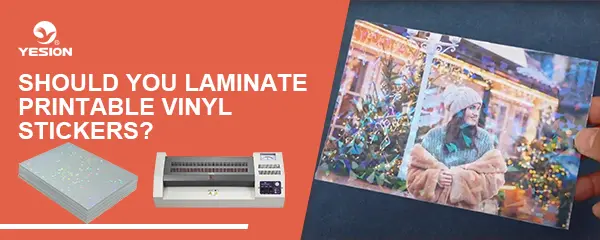
Printable vinyl stickers are widely used for product labels, packaging, branding, outdoor signage, crafts, and promotional materials. A common and important question arises during production: can you laminate printable vinyl, and more importantly, should you laminate printable vinyl stickers to improve performance and appearance?
What Does Lamination Do for Printable Vinyl Stickers?
Lamination adds a transparent protective layer over printed vinyl. This layer acts as a shield, protecting the printed surface from environmental and physical damage.
Key benefits of lamination include:
- Scratch resistance
- Water and moisture protection
- UV fade resistance
- Enhanced color depth
- Improved surface finish
For many applications, lamination is the difference between short-term use and professional-grade longevity.
Can You Laminate Printable Vinyl Stickers?
Yes, you can laminate printable vinyl, and in most professional applications, lamination is highly recommended. Printable vinyl is designed to accept lamination films that bond smoothly without affecting adhesion or print clarity.
High-quality printable vinyl features:
- Stable ink-receptive coatings
- Strong adhesive layers unaffected by lamination
- Smooth surfaces that prevent silvering or bubbles
When laminated correctly, vinyl stickers maintain flexibility while gaining superior protection.
When Should You Laminate Printable Vinyl Stickers?
Outdoor Use
If your stickers will be exposed to sunlight, rain, or temperature changes, lamination is essential. The laminate layer blocks UV rays and prevents water damage, significantly extending sticker lifespan.
High-Handling Applications
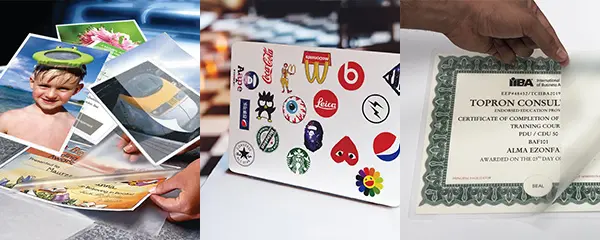
Stickers frequently touched or cleaned—such as product labels, bottles, laptops, and tool cases—benefit greatly from lamination.
Commercial Branding and Packaging
Professional packaging requires stickers that resist scuffs, fingerprints, and abrasion. Lamination ensures a clean, premium appearance throughout the product lifecycle.
Long-Term Display
For stickers intended to last months or years, lamination prevents fading, peeling, and surface wear.
When Lamination May Not Be Necessary
Not all printable vinyl stickers require lamination.
Lamination may be optional when:
- Stickers are used indoors
- The application is short-term
- The vinyl is for decorative or temporary use
- Cost and speed are higher priorities than durability
Understanding the use case helps determine whether lamination adds real value.
Types of Lamination for Printable Vinyl Stickers
Cold Lamination
Cold lamination is the most common method for printable vinyl. It uses pressure-sensitive adhesive film and does not require heat.
Advantages:
- Safe for inkjet prints
- Prevents ink reactivation
- Easy to apply by hand or machine
Thermal Lamination
Thermal lamination uses heat to bond the laminate. It is generally not recommended for inkjet printable vinyl, as heat may damage ink or vinyl layers unless specifically designed for heat lamination.
Choosing the Right Laminate Film
Glossy Laminate
- Enhances color vibrancy
- Creates a shiny, eye-catching finish
- Ideal for promotional stickers
Matte Laminate
- Reduces glare
- Provides a soft, professional look
- Excellent for readability and fingerprints resistance
UV-Protective Laminate
- Offers advanced fade protection
- Essential for outdoor or window decals
Selecting the correct laminate ensures optimal performance without compromising appearance.
How to Laminate Printable Vinyl Stickers Step by Step
Step 1: Allow Ink to Fully Dry
After printing, allow the vinyl to dry for at least 24 hours. This prevents smudging and ensures strong ink adhesion.
Step 2: Clean the Printed Surface
Remove dust or debris using a microfiber cloth to avoid trapped particles under the laminate.
Step 3: Apply Laminate Slowly
Peel back the laminate film gradually and apply from one edge using a squeegee to push out air.
Step 4: Use Even Pressure
Apply consistent pressure from the center outward to avoid bubbles and wrinkles.
Step 5: Trim and Cure
Trim the laminated vinyl and allow it to rest before cutting or application.
Does Lamination Affect Vinyl Adhesion?
Lamination does not weaken vinyl adhesive when applied correctly. In fact, lamination can enhance overall sticker performance by preventing edge lifting and surface wear.
However, improper lamination—such as using incompatible films or excessive heat—can compromise flexibility. Always match laminate type to vinyl specifications.
Common Mistakes When Laminating Printable Vinyl
- Laminating before ink fully dries
- Using thermal laminators on inkjet prints
- Applying laminate too quickly
- Trapping dust or debris
- Using low-quality laminate films
Avoiding these mistakes ensures smooth, professional results every time.
Laminated vs. Unlaminated Printable Vinyl Stickers
| Feature | Laminated Vinyl | Unlaminated Vinyl |
|---|---|---|
| Water Resistance | Excellent | Limited |
| Scratch Resistance | High | Low |
| UV Protection | Strong | Minimal |
| Lifespan | Long-term | Short-term |
| Visual Finish | Enhanced | Standard |
This comparison clearly shows why lamination is preferred for demanding applications.
Is Laminating Printable Vinyl Stickers Worth It?
So, should you laminate printable vinyl stickers? In most cases, the answer is yes. Lamination significantly improves durability, protects prints from damage, enhances visual appeal, and extends the usable life of vinyl stickers.
For short-term indoor projects, lamination may be optional. For professional, outdoor, or high-use applications, lamination is a smart and cost-effective investment that delivers consistent, high-quality results.
Related:
Difference Between Hot and Cold Laminating Film
What can you do with cold laminating film?
When would you use cold laminating?
How Cold Laminating Film Protects Your Photos and Prints
